

Bosch is committed to developing different technologies to decarbonize mobility.
Technological neutrality for sustainable mobility.
The company advocates for technological neutrality, a term that expresses the need to address both the various propulsion systems and energy sources for CO2-neutral mobility.
Experts in the field met today for a webinar entitled “Technological neutrality for sustainable mobility: the reality of different propulsion technologies.”
The purpose was to share knowledge to achieve the goals established by the European Commission: to decarbonize the European mobility system by 2050.
It is estimated that, by 2030, between 50% and 67% of the new vehicle fleet will still have a combustion engine.
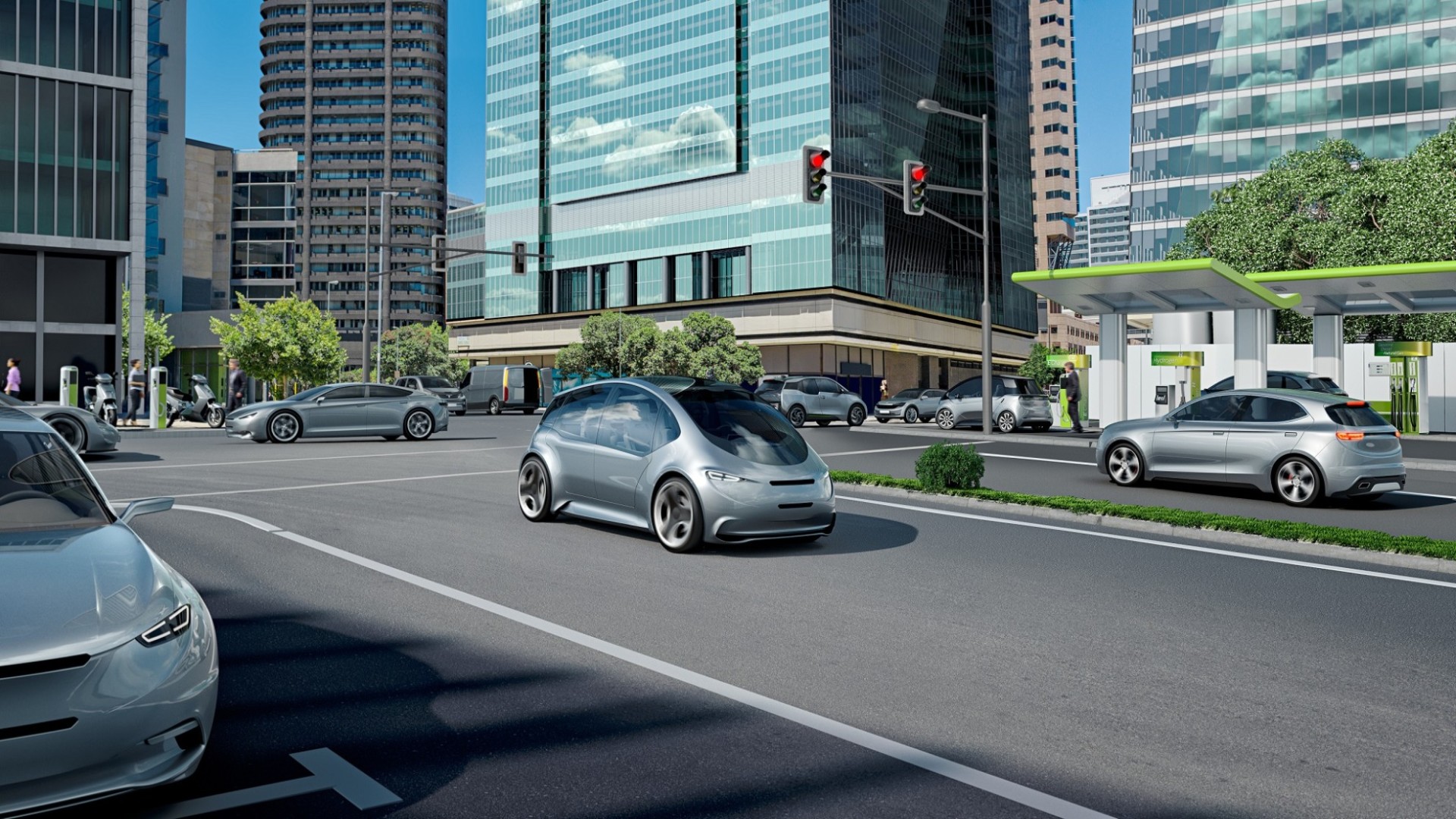
Technology neutrality was the main topic of discussion at the roundtable organized by Bosch under the title “Technology neutrality for sustainable mobility: the reality of different propulsion technologies.” This term is the one the company uses to encompass the various propulsion technologies available to address the problems posed by rising carbon dioxide emissions into the atmosphere.
The event, moderated by journalist Carlos García Hirschfeld, featured representatives from some of the main players in the mobility sector at the national and international levels—Bosch, Repsol, Hyundai, and BeePlanet Factory—as well as one of Spain’s leading science communicators, Javier Santaolalla. The meeting aimed to demonstrate that technology neutrality is the most appropriate approach to achieving the European Commission’s goal of decarbonizing the European mobility system by 2050.
Given this situation, Bosch is committed to a mix of propulsion systems and, therefore, to the use of different fuels and energies, addressing individual mobility needs. During his presentation, Ricardo Olalla, Vice President of Sales for Mobility Solutions at Bosch for Spain and Portugal, emphasized that “at Bosch, we are committed to reducing emissions to zero across all technologies. In fact, our facilities around the world are already carbon neutral. In the field of mobility, we see that we will increasingly need more energy and, therefore, we will face technological changes and new solutions that will require implementation time from an economic perspective, as well as from a technical-industrial perspective. In this sense, to meet the 2050 goals, emissions reductions will need to occur on a daily basis.” He also noted that “the internal combustion engine remains the central axis of mobility worldwide. It remains a key player, and for this reason, we continue to invest in reducing its emissions, which we estimate at up to an additional 15%.”
Bosch estimates that 67% of all new vehicles sold in 2030 will continue to have a combustion engine, with or without hybridization. Therefore, the company wants to highlight the importance of incorporating synthetic fuels, eFuels, as an alternative that can allow these vehicles to become carbon-neutral. Furthermore, eFuels are of great importance considering that there are currently more than 1.3 billion vehicles with combustion engines in use worldwide, a figure that shows that replacing the entire global fleet with another type of propulsion will take decades. In this regard, Javier Aríztegui, Senior Manager of Product Design & Energy Systems at Repsol Technology Lab, stated that “at Repsol, we are working on different alternatives such as electricity, hydrogen, and synthetic fuels obtained through green hydrogen and CO2 from the atmosphere. The transition to technological neutrality will take some time, but our goal is to make it a reality as soon as possible.”
Automakers will also be key to achieving sustainable mobility. In the case of Hyundai, which has already launched a hydrogen-powered passenger car, Javier Arboleda, the brand’s Senior Service Manager, asserted that hydrogen represents a historic opportunity. “We have five electrification solutions, as each customer has their own needs, and they are compatible, not mutually exclusive. Combustion vehicles, supported by the various hybridizations we offer, have a lot to offer in the coming years. Regarding pure electric vehicles, we are adding our hydrogen fuel cell to the batteries. It will be the best option for a significant portion of customers once an initial network of hydrogen filling stations is available, due to its unbeatable charging times and long range. Hydrogen goes far beyond the automotive industry; it is a great opportunity for Spain and will even allow us to export renewable energy.” Furthermore, in this regard, Bosch predicts that, by 2030, up to 20% of all new electric vehicles will have fuel cells, especially in large, heavy-duty trucks dedicated to long-distance freight transport.
The meeting also featured Jon Asín, CEO of BeePlanet Factory, a startup dedicated to the reuse of batteries removed from electric cars. He shared his opinion on the electrification of propulsion with attendees. According to Asín, this is not the only possible solution for achieving a zero-carbon footprint: “It is essential to consider the overall impact of each propulsion technology throughout its entire life cycle, from the extraction of raw materials to their reuse or second life and final recycling.”
The panel of experts was completed by science communicator Javier Santaolalla, who asserted that there is great potential in the approach to technological neutrality, but, at the same time, a lack of awareness among society in general. “Our world urgently needs change. First, there has been a shift in mentality, an awareness of the damage we can do to the planet by putting the existence of our species and all forms of life at risk. This has continued with a technological shift in which science has placed itself at the service of humanity in responding to this enormous challenge, possibly the greatest of our generation. These new technologies are taking the lead, assuming their proper role, and are the precise and immediate response that humanity needs. We still have time to change, and industry must lead this change,” Santaolalla stated.
The need to include different propulsion technologies according to mobility needs was the main conclusion of the participants at the meeting, which discussed the need for commitment from different stakeholders in society to achieve, through technological neutrality, a reduction in CO2 emissions, protect the environment, and improve people’s lives.

EC International Group: excellence in prototyping and small-batch production, from metal to plastic
EC International Group: Excellence in Prototyping and Small-Series Production, from Metal to Plastic In an industrial environment that increasingly demands performance, agility, and quality, combining
On the sofa with… Eduardo de la Guerra – Project Manager at Talgo in the Innovation Department | Talgo
On the sofa with… Eduardo de la Guerra – jefe de proyectos en talgo en la dirección de innovacion | Talgo
On the sofa with… Silvia Leal
On the sofa with… Silvia Leal, Experta en Tendencias de Futuro & Inteligencia Artificial, Asesora de OCDE & UE, Keynote Speaker
Behind the innovations: Jaime Ruesca, CEO de PRISMACIM
Jaime Ruesca – CEO Prismacim 1. What motivated you to start developing this product? At Prismacim, we contribute to the development of innovative products in


